
Low-Level Laser Therapy
in San Diego
A non-invasive treatment designed to support hair growth, improve scalp health, and strengthen thinning hair over time.
Understanding Low Level Laser Therapy
If you’re noticing early thinning, increased shedding, poor scalp health, or a lack of density, Low Level Laser Therapy (LLLT) offers a simple, non-invasive way to support your hair.
This FDA-cleared treatment uses targeted light energy to stimulate hair follicles at the cellular level — delivering monochromatic red light at a finely-tuned wavelength and intensity to improve follicle function, increase circulation, and create a healthier environment for hair growth.
Over time, this process helps awaken dormant follicles, producing thicker, healthier hair — without needles, downtime, or surgery.
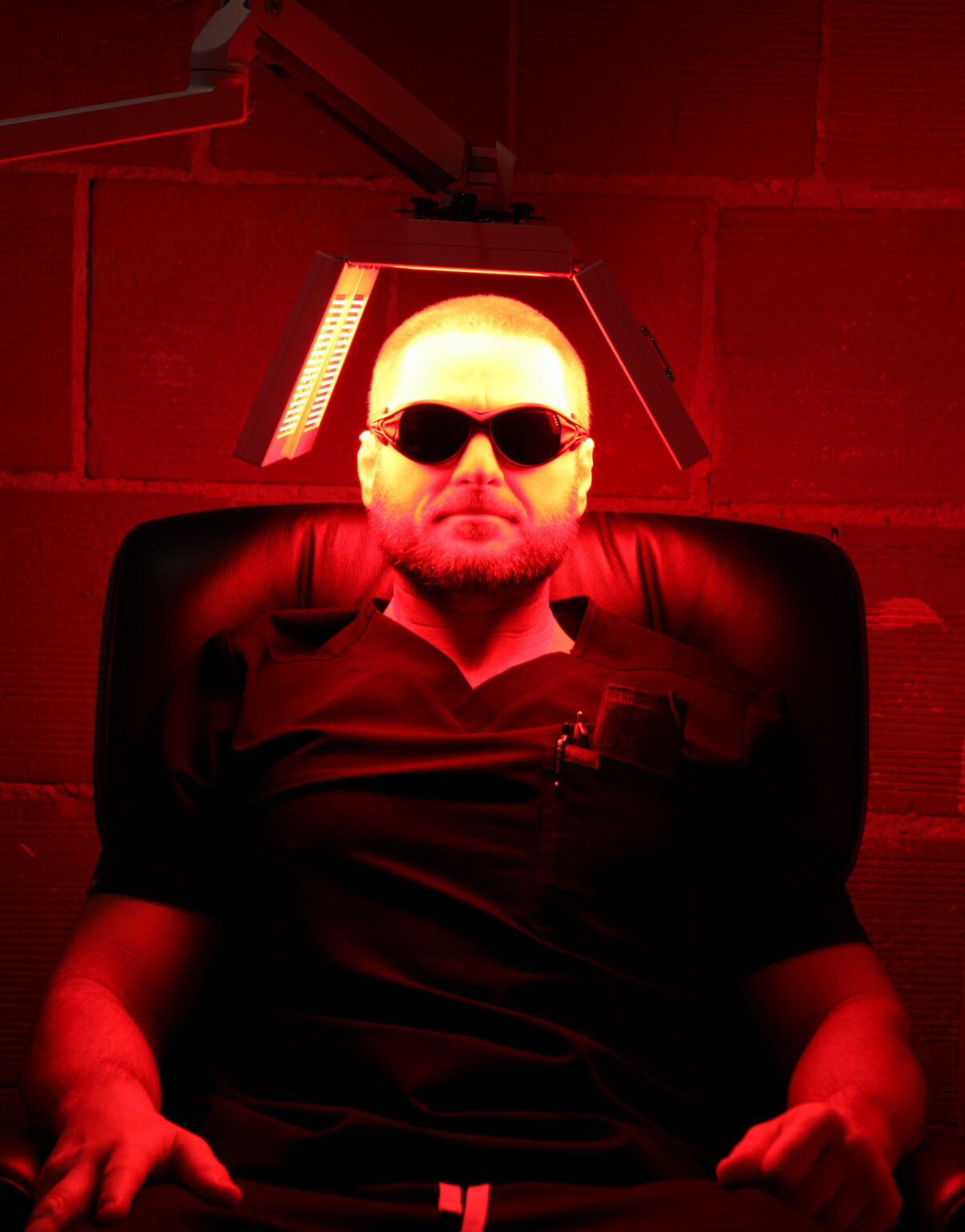
Transform Your Look
Stronger, Fuller Hair—Without Injections or Surgery
LLLT works gently and consistently, making it an ideal option for maintaining and improving hair health over time.

How Low Level Laser Therapy Works
Hair follicles rely on proper circulation and cellular activity to grow healthy hair. LLLT works by delivering light energy into the scalp, helping to:
- Stimulate weakened or inactive hair follicles
- Improve blood flow to the scalp
- Increase cellular energy production
- Support thicker, healthier hair growth

Who Is a Good Candidate?
Low Level Laser Therapy is ideal for individuals who:
- Are experiencing early-stage hair thinning
- Want a non-invasive, pain-free solution
- Are looking to maintain and strengthen existing hair
- Prefer a gradual, consistent treatment approach
- Want to enhance results from other hair restoration treatments

3. Why Choose Low Level Laser Therapy?
- Completely non-invasive and painless
- No downtime or recovery required
- Safe for ongoing, long-term use
- Convenient treatment options (in-office or at home)
- Supports overall scalp health and hair quality

Connect with Us
Get in Touch
Have questions? We’re here to help you. Drop us a message anytime!
FAQ
Low Level Laser Therapy (LLLT) uses red light wavelengths to stimulate the scalp at the follicle level. It’s a non-invasive option that many people use alongside other hair restoration approaches. Sessions are quick and don’t require any downtime.
No, the treatment is painless and most patients describe it as feeling warm or relaxing. There’s no heat damage, no needles, and no recovery time involved. You can return to work or daily activities immediately afterward.
Most people need consistent treatment over several months before noticing visible changes, since hair grows in cycles. Patience and consistency tend to matter more than session length. Our team will set realistic expectations based on your individual situation during your consultation.
Yes, many of our San Diego patients use laser therapy as part of a broader hair restoration plan, including before or after a transplant procedure. Combining treatments is common and can be tailored to your goals. Your provider will recommend the right sequence for your case.
Absolutely, LLLT is used by both men and women dealing with thinning or shedding. Many women prefer it because it’s gentle, non-surgical, and doesn’t involve medications. A consultation helps determine whether it’s a good fit for your specific pattern of hair loss.
Treatment frequency depends on the protocol your provider recommends, but sessions are typically scheduled multiple times per week early on. The schedule may taper as you progress. We’ll build a plan that works with your lifestyle during your initial visit.
LLLT is generally well-tolerated, and serious side effects are rare. Some people notice mild scalp tingling or temporary dryness, but most experience nothing unusual at all. Your provider will go over what to watch for before you begin.
Yes, we recommend an in-person consultation so we can evaluate your scalp, hair density, and goals before starting treatment. This helps us determine whether laser therapy alone is the right path or if a combination approach would serve you better. You can book a visit at our San Diego office to get started.